What it means that HIV is an enveloped retrovirus
Last reviewed November 16, 2026. OwieClear editorial team. Waiting for clinician review. Not medical advice. Talk with your doctor about your own care.
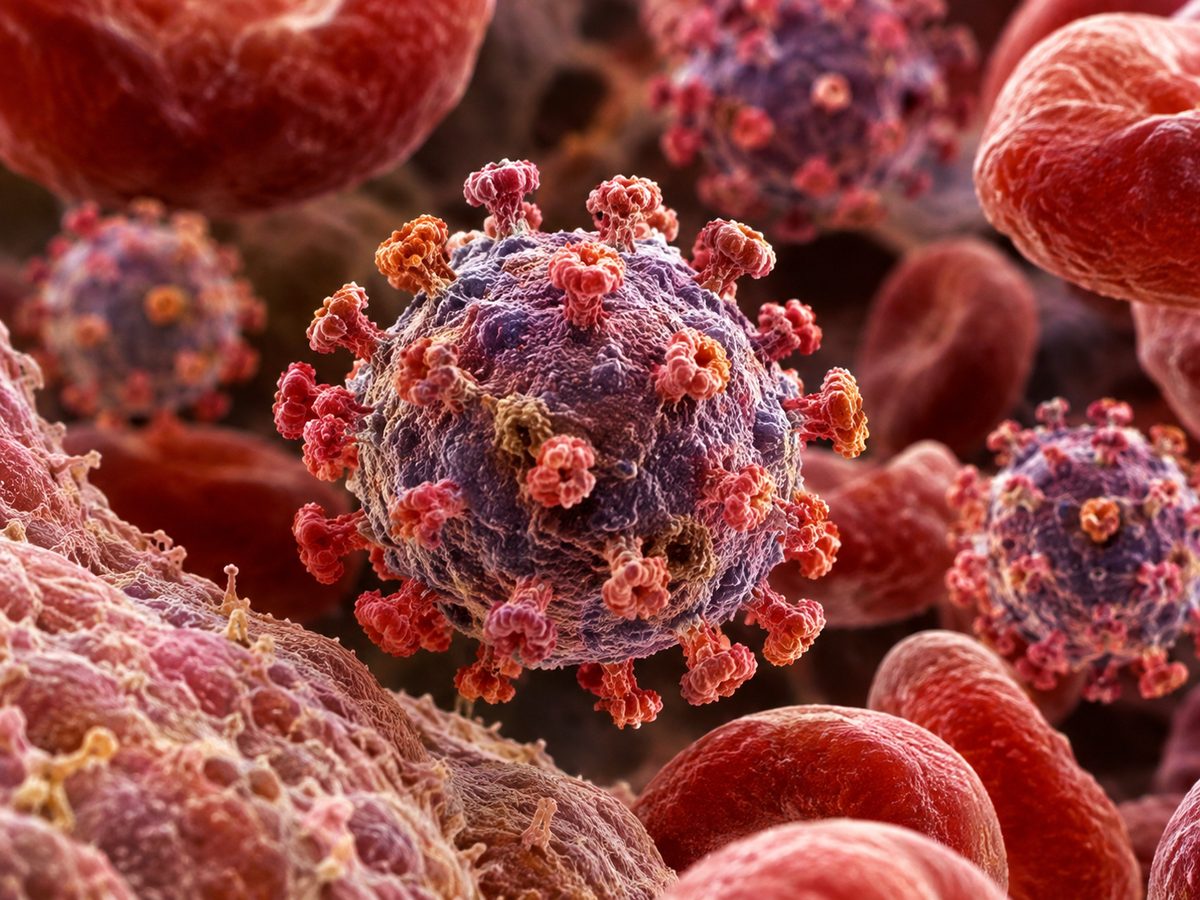
HIV is usually described in four words: an enveloped RNA retrovirus. Those words are not jargon for its own sake. Each one predicts something you can observe.
Taken together they explain why HIV is fragile on a surface and unstoppable inside a cell.
Related pages: HIV
The bottom line
- HIV is wrapped in a lipid membrane taken from the last cell it left.
- That envelope is easily destroyed by drying, soap, bleach, heat and stomach acid.
- The envelope spikes, gp120 and gp41, are the only viral parts antibodies can reach from outside.
- Retrovirus means it copies RNA back into DNA and inserts it into the host genome.
- Why decades of vaccine work have not produced a widely protective vaccine.
- How much broadly neutralizing antibodies can be made to do, either as prevention or as treatment.
The story, step by step
What the evidence labels mean
A stolen piece of human membrane
What happens
When a new HIV particle buds out of a cell, it does not build its own outer coat. It wraps itself in the cell's membrane on the way out.
What the research shows
- That outer layer is a lipid bilayer, essentially fat, studded with viral spike proteins.
- Fatty membranes fall apart easily. Soap dissolves them, drying destroys them, heat and bleach destroy them, and stomach acid destroys them.
- This is why HIV is not spread by touching, sharing dishes, toilet seats, swimming pools, or insect bites.
- It is also why transmission requires fluid going more or less directly from one person's body into another's: blood, semen, vaginal and rectal fluids, and breast milk.
Why it matters
Almost every reassuring fact about how HIV is not transmitted comes from this one structural detail.
What's still uncertain
- Laboratory experiments that keep virus alive on surfaces use concentrations far above anything found in real life, which is why their numbers can be misleading.
Read more
- CDC: About HIVGovernment
Next: The spikes
The only part an antibody can reach
What happens
The spikes are made of three gp120 heads sitting on three gp41 stalks.
What the research shows
- gp120 grips the CD4 receptor; gp41 does the work of fusing the membranes.
- Everything else the virus owns is hidden inside, so the spike is the only realistic target for a protective antibody or vaccine.
- The spike is coated in human-type sugar molecules, a glycan shield, which hides much of its surface from the immune system.
- The parts that must stay the same to keep working are mostly tucked away, and the parts that are exposed mutate freely.
Why it matters
A target that is mostly hidden, heavily disguised and constantly changing is close to the hardest possible case for vaccine design.
What's still uncertain
- Broadly neutralizing antibodies that reach the conserved parts do exist in some people, but teaching a vaccine to produce them reliably has not yet worked.
Read more
- NIAID: HIV replication cycleGovernment
- OwieClear: How HIV targets CD4 T-cellsOwieClear
Next: Retro
The direction of copying is backwards
What happens
The usual direction of biology is DNA to RNA to protein. A retrovirus runs the first step in reverse.
What the research shows
- HIV stores its genes as two copies of RNA and carries the enzyme that turns them into DNA.
- That enzyme, reverse transcriptase, was the first HIV drug target; AZT blocks it, and so do most of the drugs still used in combination today.
- Converting to DNA is what makes insertion into a chromosome possible at all.
- Human chromosomes already contain ancient retroviral sequences from infections in our distant ancestors. Roughly eight percent of the human genome is retroviral in origin.
Why it matters
Retrovirus is not a label for how severe an infection is. It describes a copying direction, and that direction is why HIV becomes a permanent part of infected cells.
What's still uncertain
- What most of those inherited ancient retroviral sequences do in humans, if anything, is largely unknown.
Read more
- HIVinfo (NIH): The HIV life cycleGovernment
Next: Small genome
Nine genes, doing a great deal
What happens
HIV carries about 9,700 letters of genetic code and nine genes. A human has roughly three billion letters.
What the research shows
- Three genes make the structural pieces and the enzymes: gag, pol and env.
- The remaining six are regulatory and accessory genes, including tat, rev, nef, vif, vpr and vpu.
- Several of those small genes exist mainly to disable host defences. Vif, for example, neutralizes a human protein called APOBEC3G that would otherwise wreck the viral genome while it is being copied.
- Nef helps infected cells avoid being recognized and killed.
Why it matters
Most of what HIV carries beyond the bare minimum is devoted to switching off the body's built-in antiviral systems.
What's still uncertain
- The full role of some accessory genes in living human infection, as opposed to cell culture, is still being characterized.
Read more
- NIAID: HIV replication cycleGovernment
Next: Two viruses
HIV-1 and HIV-2 are not the same
What happens
What is usually called HIV is HIV-1. There is a second, less common virus.
What the research shows
- HIV-1 group M causes the global pandemic and accounts for the overwhelming majority of infections worldwide.
- HIV-2 is found mainly in West Africa. It progresses more slowly and is transmitted less easily.
- HIV-2 is naturally resistant to one whole class of drugs, the non-nucleoside reverse transcriptase inhibitors, so treatment must be chosen differently.
- Some standard tests do not distinguish the two, which is why laboratories use a confirmatory test that separates them.
Why it matters
A person with HIV-2 can be given the wrong drug combination if the distinction is missed, so the test result matters clinically, not just academically.
What's still uncertain
- Viral load testing for HIV-2 is less widely available and less standardized than for HIV-1.
Read more
- CDC: About HIVGovernment
- OwieClear: Where HIV came fromOwieClear
More plain-language reading
- OwieClear: How HIV targets CD4 T-cellsOwieClear
- OwieClear: Why HIV has no cure yetOwieClear
- OwieClear: How HIV treatment worksOwieClear