Recognizing alcohol poisoning, and what to do
Last reviewed November 16, 2026. OwieClear editorial team. Waiting for clinician review. Not medical advice. Talk with your doctor about your own care.
If you are reading this because someone is unwell right now: call 911 or your local emergency number. Do not wait to see whether they improve.
Alcohol poisoning kills people who were left to sleep it off by friends who thought the worst was over. It usually was not.
Related pages: Alcohol poisoning
The bottom line
- Unresponsiveness, slow or irregular breathing, seizures, vomiting while not fully conscious, and cold or bluish skin are emergency signs.
- Blood alcohol can keep rising for 30 to 90 minutes after the last drink.
- Coffee, cold showers and walking someone around do not reverse alcohol poisoning.
- Turning someone on their side and staying with them prevents the most common cause of death.
- How many deaths are prevented by bystanders calling earlier rather than later.
- How much fear of getting into trouble delays calls, particularly among students.
The story, step by step
What the evidence labels mean
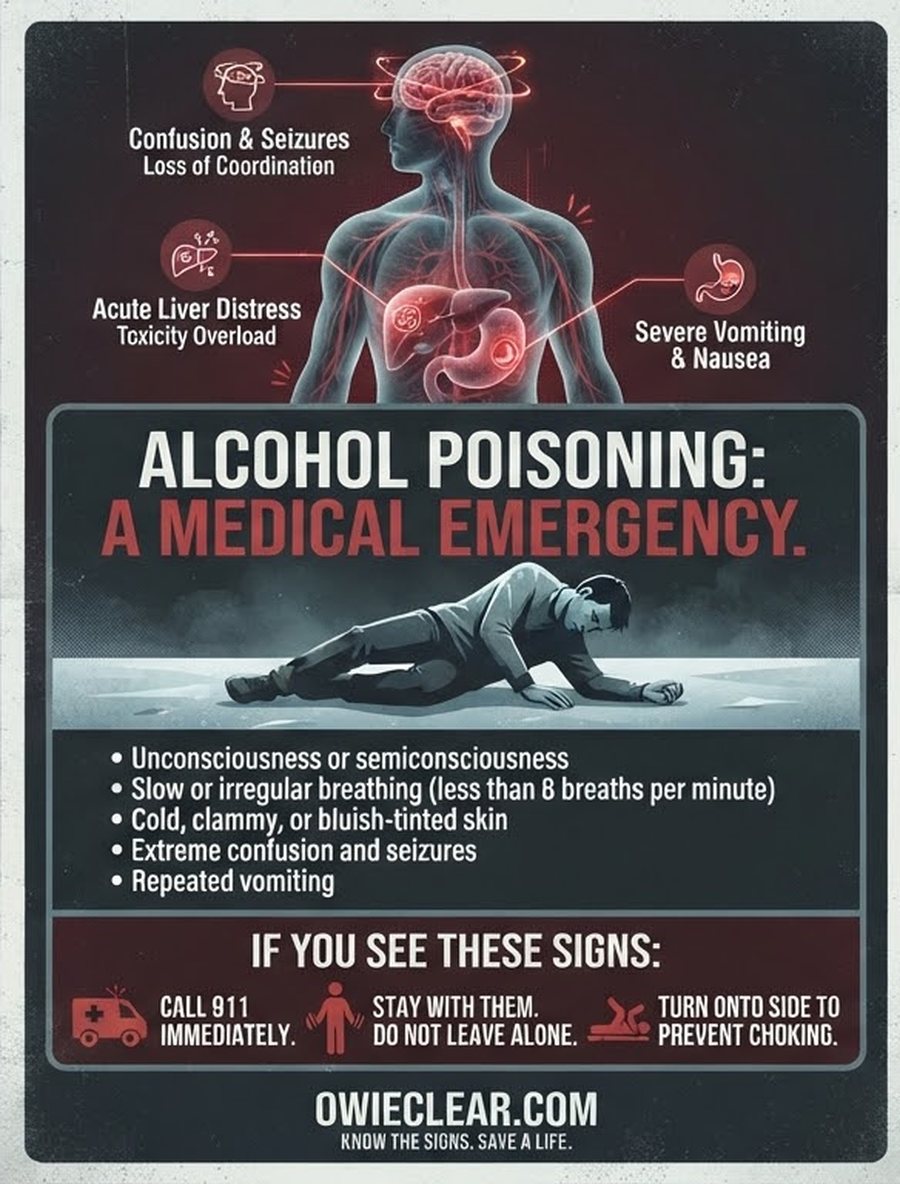
What should make you call
What happens
Any one of these is enough. You do not need several.
What the research shows
- Cannot be woken, or only half rouses and slips back.
- Slow, shallow or irregular breathing: fewer than about 8 breaths a minute, or pauses longer than 10 seconds.
- Vomiting while asleep or only semi-conscious.
- Cold, pale, clammy or bluish skin, or blue lips or fingertips.
- A seizure, or confusion so severe they cannot sit up or respond sensibly.
Why it matters
You are not expected to diagnose anything. Any of these means call, and let the people who arrive sort it out.
What's still uncertain
- These signs overlap with head injury, low blood sugar and other overdoses, which is another reason to call rather than wait.
Read more
- NIAAA: Understanding the dangers of alcohol overdoseGovernment
- CDC: Alcohol poisoning deathsGovernment
Next: What to do
Three things, in order
What happens
While you wait for help, what you do matters.
What the research shows
- Call 911 or your local emergency number. In the US you can also call Poison Control on 1-800-222-1222.
- Turn them onto their side, in the recovery position, with the head tilted slightly down so vomit drains out of the mouth rather than into the lungs.
- Stay with them. Keep checking that they are breathing. Keep them warm with a coat or blanket.
- Tell the responders what and how much they drank, and anything else they took, including medicines. Nobody is in trouble for this; it changes the treatment.
- If they stop breathing and you know CPR, start it.
Why it matters
The side position is the single most useful thing a bystander does, because choking on vomit while unconscious is a leading cause of death here.
What's still uncertain
- Recovery position technique varies slightly between guidelines; the principle is the same.
Read more
- NIAAA: Understanding the dangers of alcohol overdoseGovernment
- Poison Control (US): 1-800-222-1222Nonprofit
Next: What not to do
The things that feel helpful and are not
What happens
Several standard responses do nothing, and some make things worse.
What the research shows
- Do not leave them to sleep it off, alone or in a room with someone also asleep. Blood alcohol can keep rising after the last drink.
- Coffee and caffeine do not speed up alcohol clearance. They make someone a more awake drunk person, not a less poisoned one.
- A cold shower does not help and can cause a fall or worsen the drop in body temperature.
- Do not try to make them vomit. With a depressed gag reflex this increases the risk of choking.
- Do not give food, drink or more alcohol to someone who cannot sit up and swallow properly.
- Do not walk them around. It does not clear alcohol and it risks injury.
Why it matters
Everything on this list is something people do instead of calling. That is the harm in it.
What's still uncertain
- These interventions have been studied enough to be clear that none of them lowers blood alcohol.
Read more
Next: Why the delay happens
Fear of consequences
What happens
The most common reason people do not call is worry about getting someone, or themselves, into trouble.
What the research shows
- Many US states and most universities have medical amnesty or Good Samaritan policies that protect people who call for help in an alcohol emergency.
- Policies vary, and the details matter less than the outcome: a disciplinary conversation is survivable, respiratory arrest often is not.
- If you are unsure whether it is serious enough, that uncertainty is itself a reason to call.
- Emergency services would far rather attend someone who turns out to be fine.
Why it matters
No one has ever regretted calling too early. People do regret the other thing.
What's still uncertain
- Coverage of amnesty policies varies by state and institution; check your own if you want to know in advance.
Read more
- NIAAA: Understanding the dangers of alcohol overdoseGovernment
- CDC: Alcohol poisoning deathsGovernment
Next: At the hospital
What actually happens
What happens
Knowing what to expect takes some of the fear out of calling.
What the research shows
- There is no antidote that sobers someone up. Treatment is support while the body clears the alcohol.
- The airway is protected, with oxygen and, if breathing is failing, a breathing tube.
- Blood sugar is checked and intravenous glucose is given if it is low, which is common.
- Thiamine, vitamin B1, is usually given, and in people at risk of deficiency it is given before or with glucose, to avoid precipitating a serious brain injury called Wernicke encephalopathy.
- Fluids, warming, monitoring of breathing and heart rhythm, and checks for a head injury or other causes.
Why it matters
Most people who get to hospital in time recover fully. The deaths happen at home, on sofas and in dorm rooms.
What's still uncertain
- Management varies with how severe the case is and what else was taken.