Pacing and the energy envelope
Last reviewed November 16, 2026. OwieClear editorial team. Waiting for clinician review. Not medical advice. Talk with your doctor about your own care.
Pacing is the central self-management approach in long COVID with post-exertional malaise, and it is the opposite of the instinct everyone has, which is to use a good day fully.
It is not resting all the time and it is not giving up on activity. It is spending inside the available budget so the following day is not lost.
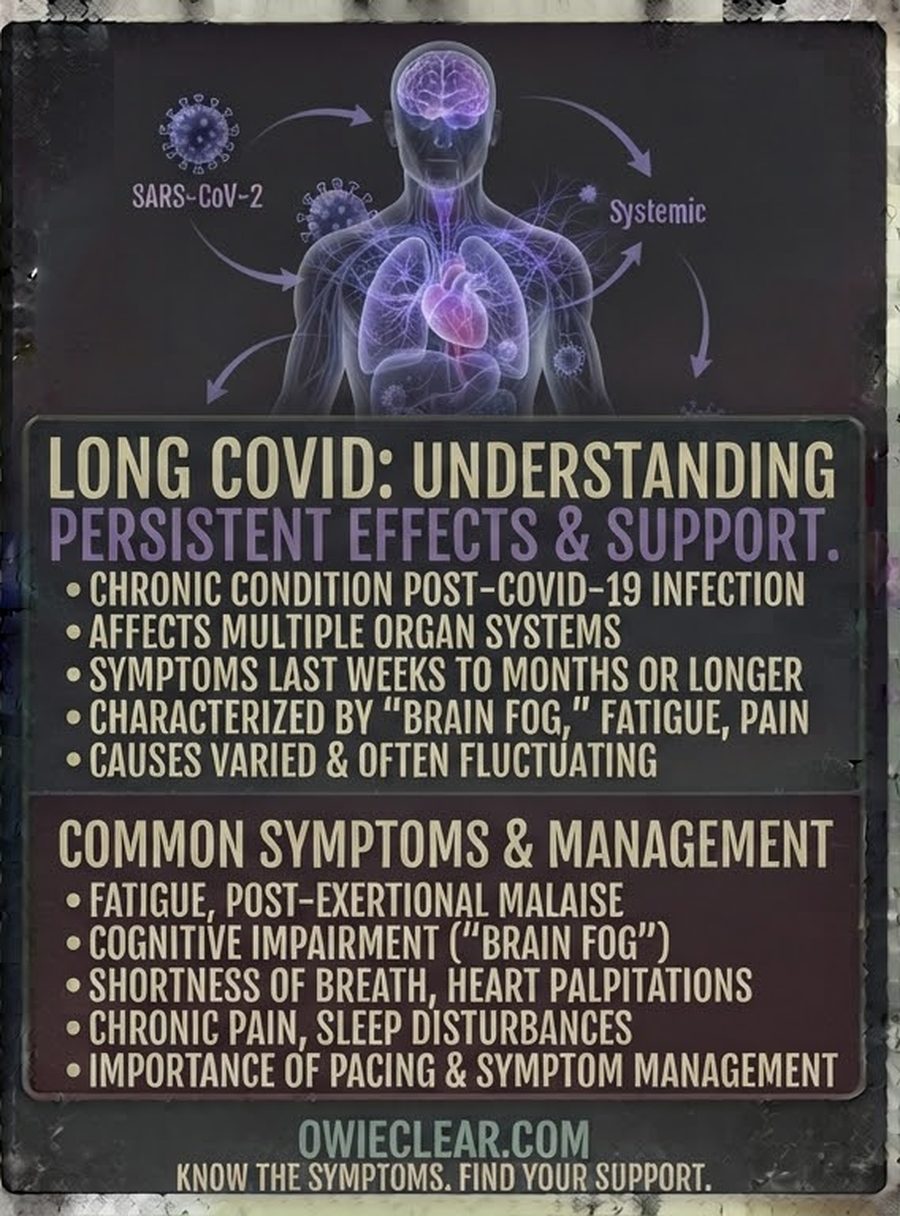
Related pages: Long COVID · Chronic fatigue syndrome (ME/CFS)
The bottom line
- Post-exertional malaise worsens with overexertion.
- Pacing is the recommended approach where PEM is present.
- Fixed graded exercise programmes can worsen PEM.
- Recovery is measured over weeks and months rather than days.
- How best to individualize pacing, which has little trial evidence.
- Whether heart rate thresholds improve outcomes.
The story, step by step
What the evidence labels mean
Staying inside it
What happens
The core idea and the number that goes with it.
What the research shows
- Aim to use roughly 70 to 80 percent of what you feel capable of, including on good days. The last portion is what pays for tomorrow.
- Break activity into short blocks, around 15 to 20 minutes, with a rest before tiredness arrives rather than after.
- Rest means genuinely low stimulation, ideally lying down: not scrolling, not television, not a phone call.
- Stopping while still feeling capable is the part people find hardest and the part that works.
- A good day is evidence that the current level is sustainable, not an invitation to do everything that has been waiting.
Why it matters
The question is not how much you can do today. It is how much you can do today without losing tomorrow.
What's still uncertain
- Pacing is widely recommended and difficult to test in randomized trials.
Read more
- CDC: ME/CFSGovernment
- CDC: Long COVIDGovernment
Next: Heart rate
Using a monitor
What happens
A practical tool, with a correction to a common claim.
What the research shows
- Many people use a heart rate monitor or smartwatch to set a ceiling, staying below a chosen number during activity.
- A commonly used conservative ceiling is around 50 to 60 percent of maximum heart rate, or a formula such as 220 minus age, minus 60.
- This is sometimes described as the anaerobic threshold. That is not what the anaerobic threshold is: it sits considerably higher in most people, and is measured rather than estimated. The low ceiling is a deliberately cautious pacing target, not a physiological threshold.
- The practical value is real even so: an external number is easier to respect than a feeling, especially since the crash is delayed.
- Heart rate also rises with heat, standing, infection and anxiety, so the number is a guide rather than a rule.
Why it matters
Use the number as a brake, not as physiology. It works because it is conservative, not because it marks a metabolic line.
What's still uncertain
- No trial has shown heart rate-guided pacing improves long-term outcomes.
Read more
- CDC: ME/CFSGovernment
- OwieClear: POTS (postural orthostatic tachycardia syndrome)OwieClear
Next: Exercise
The important caveat
What happens
Where standard rehabilitation advice can cause harm.
What the research shows
- Where post-exertional malaise is present, structured exercise programmes that increase activity on a fixed schedule can make people worse.
- Graded exercise therapy was removed from ME/CFS guidance after evidence of harm, and the same caution applies in long COVID with PEM.
- This does not mean no movement. It means increases are led by symptoms, with holding steady as a legitimate outcome, and with the next day used as the test.
- Where PEM is absent and the problem is deconditioning after a severe illness, graded reconditioning is appropriate and helpful. Those are different situations.
- Recumbent and seated activity, short and frequent, is usually tolerated better than upright or sustained activity, particularly where there are autonomic symptoms.
Why it matters
The question that decides the approach is simple: does effort reliably make you worse a day or two later? If yes, symptom-led. If no, graded building is fine.
What's still uncertain
- Who benefits from graded activity and who is harmed cannot yet be predicted.
Read more
- CDC: ME/CFSGovernment
- OwieClear: Living with post-viral symptomsOwieClear
Next: Finding your level
The diary
What happens
How to work out where the edge actually is.
What the research shows
- Keep a simple record for two to three weeks: activity, symptoms, and how the following day went.
- The delay is what makes this necessary. A crash on Thursday often belongs to Tuesday, and that link is invisible without a record.
- Look for the pattern rather than the single event: which kinds of activity, at what duration, reliably cost a day.
- Set a baseline that is sustainable for a week without crashing, then hold it for a while before changing anything.
- Increase by small amounts, one thing at a time, and only after several stable weeks. Going back a step after a crash is normal and not a failure.
Why it matters
Two weeks of notes usually reveals a pattern that months of guessing did not. It is also what makes an appointment productive.
What's still uncertain
- Activity diaries help people and have not been tested as an intervention.
Read more
- CDC: ME/CFSGovernment
- CDC: Long COVIDGovernment
Next: The hard part
Living inside limits
What happens
What pacing costs, honestly.
What the research shows
- Pacing means deciding in advance what the day's budget goes on, which usually means things get dropped.
- It requires other people to understand, which is harder when the illness is invisible and fluctuating.
- It conflicts with every instinct about pushing through, and with a lot of advice from people who mean well.
- Flexibility matters more than discipline: the budget changes day to day, so a fixed plan is a plan that will fail.
- Grief about what has been lost is a normal part of this, and it is not the same as depression, though the two can coexist and both deserve support.
- Most people do improve over months to years, and holding a sustainable baseline is what makes room for that.
Why it matters
Pacing is not giving up. It is the approach that keeps the most function available over months rather than days.
What's still uncertain
- Long-term outcomes vary widely and are hard to predict.
Read more
- CDC: Long COVIDGovernment
- MedlinePlus: DepressionGovernment