Is it strep, or a virus?
Last reviewed November 16, 2026. OwieClear editorial team. Waiting for clinician review. Not medical advice. Talk with your doctor about your own care.
The large majority of sore throats are caused by viruses, where antibiotics do nothing at all. Strep accounts for a minority, higher in school-age children than in adults.
Features can point one way or the other, and no combination of them is reliable enough to decide on. That is why a test exists and why clinicians use it.
Related pages: Strep throat · Sore throat (pharyngitis)
The bottom line
- Most sore throats are viral.
- Group A strep causes a minority of sore throats.
- Cough and runny nose point away from strep.
- Clinical features alone cannot confirm strep.
- How best to decide who to test, where guidelines differ between countries.
- How much antibiotics shorten symptoms, which is modest.
The story, step by step
- 1. The odds ()
- 2. Points toward strep ()
- 3. Points away ()
- 4. Why not just treat ()
- 5. When to be seen ()
What the evidence labels mean
What causes sore throats
What happens
The background rates, which set the starting point.
What the research shows
- Most sore throats in adults are viral: common cold viruses, flu, COVID, adenovirus and others.
- Group A strep causes roughly one in ten sore throats in adults and a larger share, around a quarter to a third, in school-age children.
- It is uncommon under three years old, and rheumatic fever is rare in that age group, which is why testing is usually not done in toddlers.
- Mono is another cause worth remembering, particularly in teenagers and young adults with a severe sore throat and prolonged fatigue.
- Viral sore throats resolve on their own. Antibiotics do nothing for them and carry side effects and resistance costs.
Why it matters
Starting from the odds is useful: if a sore throat comes with a cough and a runny nose, strep is unlikely whatever else it feels like.
What's still uncertain
- Proportions vary by age, season and setting.
Read more
- CDC: Strep throatGovernment
- MedlinePlus: Sore throatGovernment
Next: Points toward strep
The classic features
What happens
The features clinicians weigh, usually combined into a score.
What the research shows
- Fever, usually over 38 degrees Celsius or 100.4 Fahrenheit.
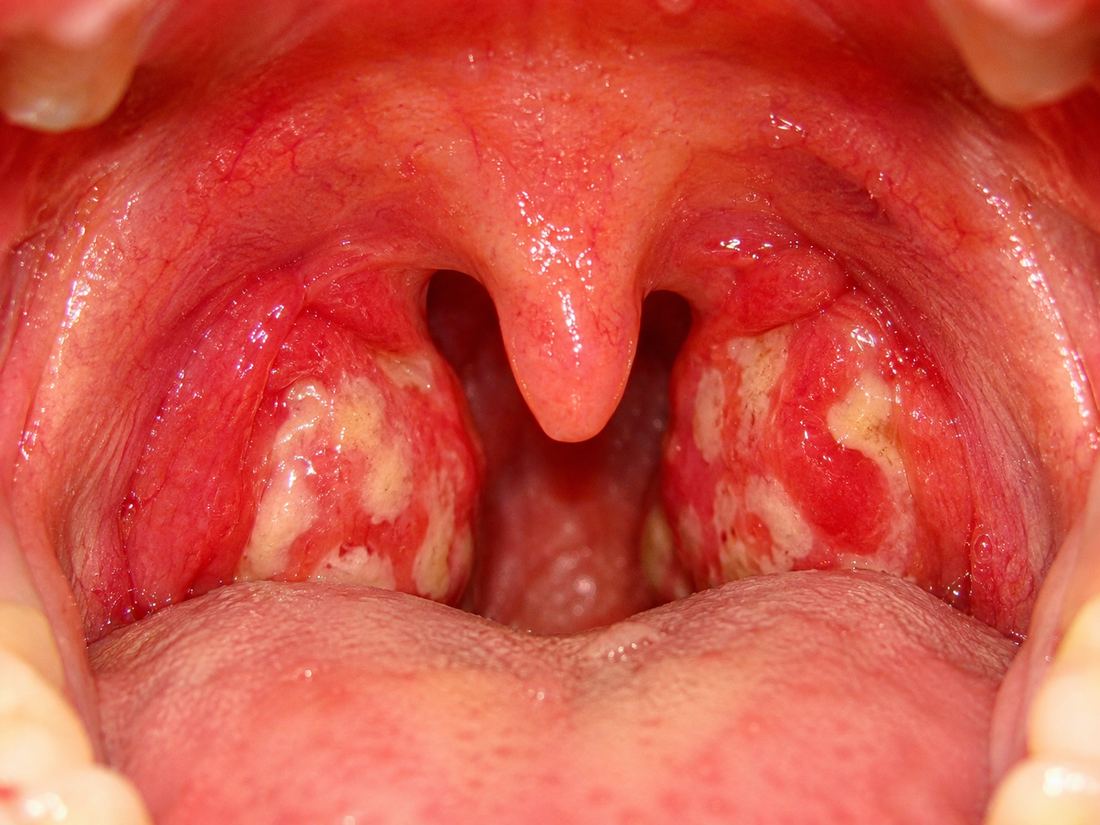
- Swollen tonsils, often with white or yellow patches on them.
- Tender, swollen lymph nodes at the front of the neck.
- Absence of cough. This one carries more weight than people expect.
- Sudden onset, severe pain on swallowing, headache, and in children stomach pain, nausea or vomiting.
- Tiny red spots on the roof of the mouth, and a fine sandpaper-textured rash with a flushed face, which is scarlet fever caused by the same bacteria.
Why it matters
The strongest single clue is what is absent. A cough or a runny nose makes strep much less likely.
What's still uncertain
- These features perform better in combination than individually, and still imperfectly.
Read more
- CDC: Strep throatGovernment
- OwieClear: Scarlet feverOwieClear
Next: Points away
Viral features
What happens
What suggests the antibiotics are not needed.
What the research shows
- Cough, runny or blocked nose, sneezing, hoarseness and red eyes all point toward a virus.
- Hoarseness in particular suggests the larynx is involved, which is viral rather than streptococcal.
- Mouth ulcers or blisters point toward specific viruses rather than strep.
- A gradual onset over several days with a scratchy rather than severe pain fits a cold.
- Severe sore throat with marked fatigue lasting more than a week, particularly in a teenager or young adult, raises the question of mono rather than strep.
Why it matters
Hoarseness and cough together make a strep diagnosis unlikely enough that many guidelines say not to test.
What's still uncertain
- No single feature rules strep out completely.
Read more
- MedlinePlus: Sore throatGovernment
- OwieClear: The phases of EBVOwieClear
Next: Why not just treat
The case for testing first
What happens
The argument against giving antibiotics without a test.
What the research shows
- Antibiotics do nothing for viral sore throats, which is most of them.
- They cause side effects: diarrhoea, rash, thrush, and occasionally serious allergic reactions. Unnecessary courses also drive antibiotic resistance in other bacteria.
- Being wrongly labelled penicillin-allergic after a rash, particularly when the illness was actually mono, affects antibiotic choices for decades.
- Even for genuine strep, antibiotics shorten symptoms by only about a day. The main reason for treating is preventing rheumatic fever and reducing spread.
- Crucially, treatment started within about nine days of symptoms still prevents rheumatic fever. There is no rush that justifies skipping the test.
Why it matters
Waiting a day for a test result costs nothing medically. That is the fact that makes testing rather than guessing reasonable.
What's still uncertain
- How much antibiotics reduce complications in low-incidence countries is debated.
Read more
- CDC: Antibiotic prescribing and useGovernment
- CDC: Acute rheumatic feverGovernment
Next: When to be seen
What needs attention
What happens
Beyond the ordinary sore throat.
What the research shows
- Trouble breathing, noisy breathing, or drooling because swallowing is too painful: emergency.
- Inability to open the mouth fully, a muffled voice, or swelling on one side of the throat: this suggests an abscess and needs same-day assessment.
- A sore throat with a stiff neck, severe headache, or a rash of small purple spots that does not fade under pressure.
- Fever and sore throat in someone on medication that suppresses the immune system or affects white cell counts.
- A sore throat that is not improving after about a week, or that returns with a higher fever after first getting better.
- For an ordinary sore throat with cough and runny nose, home care and time are the right answer.
Why it matters
One-sided swelling with a muffled voice and difficulty opening the mouth is the pattern worth knowing. That combination is an abscess until proven otherwise.
What's still uncertain
- Abscess can develop even in people already on antibiotics.
Read more
- CDC: Strep throatGovernment
- MedlinePlus: Sore throatGovernment